
Scaling UX in Enterprise: Adapting Agile for a Lean UX Team
Use limited UX capacity effectively across a large product portfolio.
UX Process • Agile/Scrum


Design Goal
Improve capacity and roadmap planning
Make priorities transparent to stakeholders
Create a process flexible enough to fit how the org actually worked
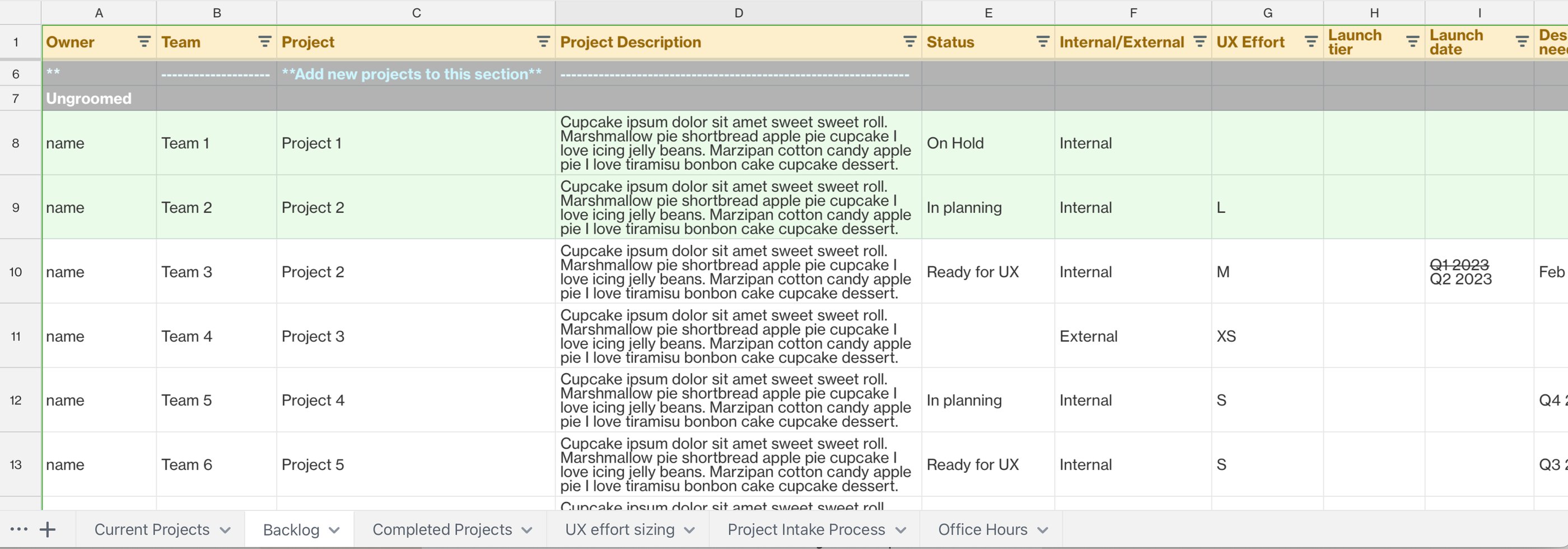
We tracked projects in a single spreadsheet with high-level descriptions and estimates, and met once a month to review priorities. But many requests, including urgent ones, bypassed the spreadsheet entirely and came through Slack.
This was workable when I was the only designer. As the team grew and requests increased across 30+ products, it stopped scaling:
We couldn't see what was coming, so we missed overlapping projects and chances to collaborate
Urgent Slack requests pulled focus from planned work
Priorities shifted between monthly check-ins, making it hard to know if we were working on the highest-impact projects
The new process gave our small team the structure to focus on high-impact work and helped the organization learn how to work with UX.
We had one shared view of UX work across UX, product, and engineering teams
Spent less time spent triaging new requests
Had more focus on high-priority work, with fewer disruptions from ad hoc requests
Stakeholders engaged UX earlier, with clearer goals
I later presented our process to the broader UX organization. It sparked conversations with teams facing similar challenges, and several went on to explore similar approaches.
Results and Impact




The challenge: My UX team of two designers and one researcher was supporting an organization with 30+ products, with requests arriving ad hoc through Slack and no clear way to prioritize.
My role: UX designer and process lead: pitched and built the Agile-based process, managed intake and backlog, and facilitated sprint planning and stakeholder syncs.
The outcome: Created a single source of truth for UX, product, and engineering teams, cut time spent handling new requests, and inspired other UX teams across the organization to explore similar processes.
Project Summary
Business Goal
I proposed adapting Agile to our UX work, built the structure with my team, and got buy-in from product partners.
What it Looked Like Before
Goals
I was the first UX designer this organization had worked with, and teams weren't sure when or how to engage UX. As our team grew to two designers and a researcher supporting 30+ products, we needed a clear, shared way to prioritize work.
Pitched a new way of working
Created a single-entry point for requests
What I Did
We broke large projects into smaller milestones, which helped us show steady progress and adjust quickly when scope or priorities changed.
I led prioritization with our product managers. Before each sprint, our UX team reviewed the backlog to spot gaps and overlaps. Then I facilitated planning with product managers to clarify ambiguous projects and negotiate priority shifts.
I started a weekly office hours. This gave teams space for quick questions and small requests without disrupting sprints. It also became a way to help stakeholders shape ambiguous projects before they reached the backlog.
Then we moved to two-week sprints
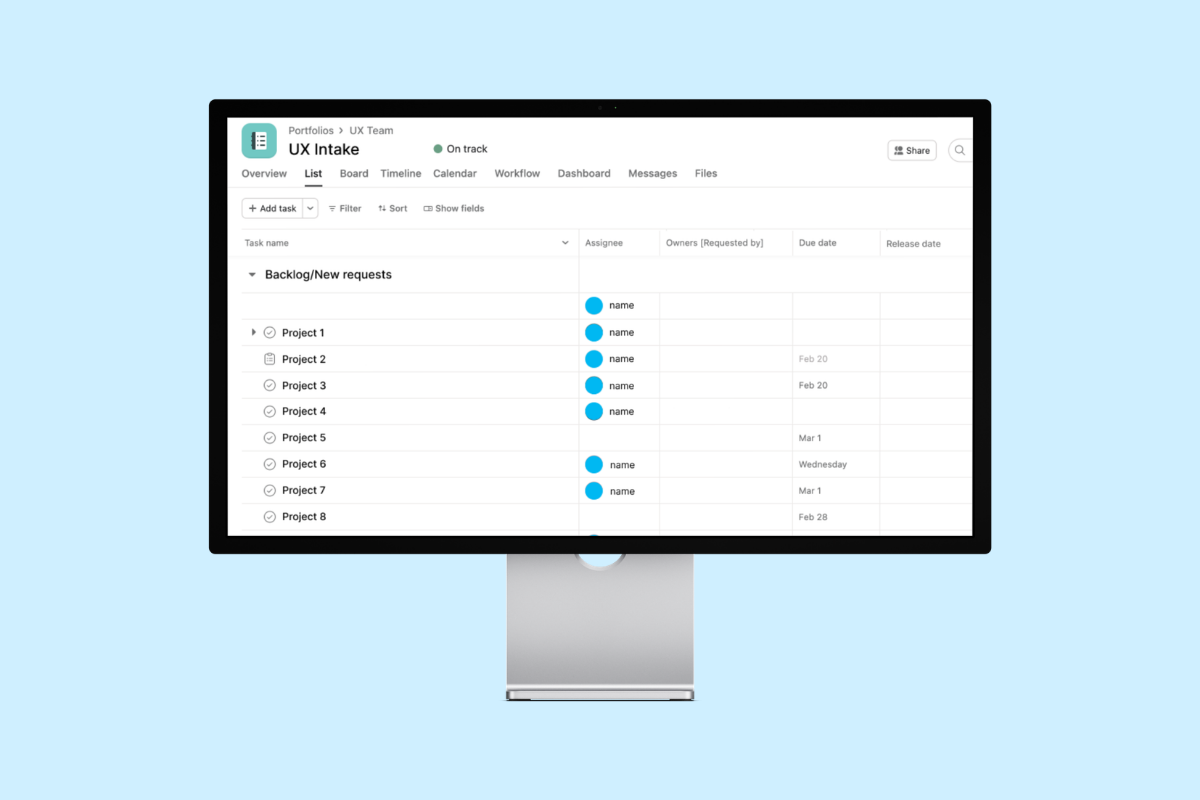
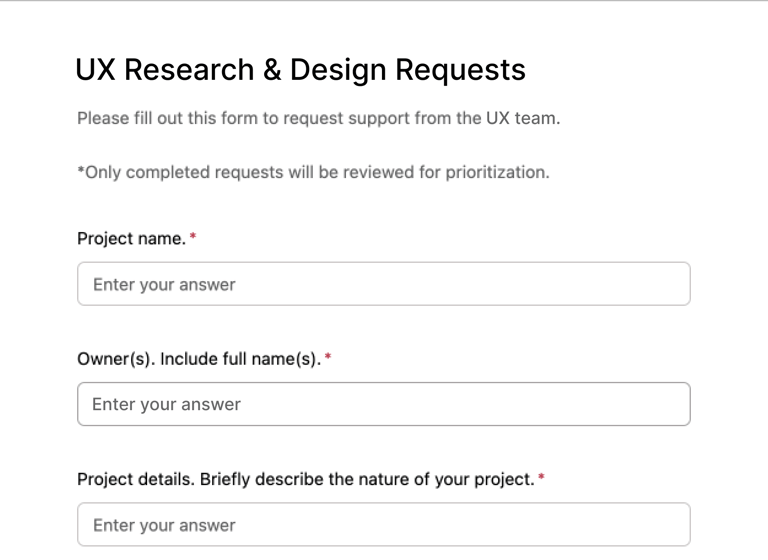
We designed an intake form for all design and research requests. It captured goals and priority up front and fed directly into a shared backlog in Asana, which gave UX, product, and engineering one source of truth.
Reflection
This gave the UX team more visibility into upcoming projects and brought us into conversations at the beginning of the product lifecycle instead of near the end. Over time, that early involvement built trust with our product partners and turned UX from a service teams requested into a partner they relied on.
What Worked
Priorities still shifted often. The next phase would be to build a quarterly roadmap for alignment with product leadership so sprint-level negotiation wasn't the only place priorities get decided.
What I'd Do Differently

Turn Ideas into Results
Whether you’re launching something new, improving an existing experience, or trying to turn more visitors into customers, I help design solutions that drive clarity, trust, and results.
Let’s connect.
Contact
Want to learn more? Let's connect.
hello@merielkaren.com
© 2026. All rights reserved.
Get in touch